Physiotherapy for Babies

Babies Gross Motor Milestones
Every baby develops at their own pace, but sometimes they need a little extra support along the way. Physiotherapy can help babies build the strength, coordination, balance, and confidence they need to develop new movement skills. Through play-based activities, a physiotherapist can support milestones such as tummy time, rolling, sitting
Every baby develops at their own pace, but sometimes they need a little extra support along the way. Physiotherapy can help babies build the strength, coordination, balance, and confidence they need to develop new movement skills. Through play-based activities, a physiotherapist can support milestones such as tummy time, rolling, sitting, crawling, pulling to stand, and walking. Physiotherapy may also be helpful if your baby prefers one side, has difficulty with tummy time, seems stiff or floppy, or is taking longer to develop certain skills. Our goal is to make therapy fun and functional, while giving parents simple strategies they can easily incorporate into everyday play and routines.

Plagiocephaly/Torticollis
Some babies develop a flat spot on the back or side of their head, often called plagiocephaly, or have difficulty turning their head equally in both directions, which can be related to torticollis (tight muscles in the neck). Physiotherapy can help identify what may be contributing to these concerns and provide gentle, age-appropriate str
Some babies develop a flat spot on the back or side of their head, often called plagiocephaly, or have difficulty turning their head equally in both directions, which can be related to torticollis (tight muscles in the neck). Physiotherapy can help identify what may be contributing to these concerns and provide gentle, age-appropriate strategies to improve neck movement, strength, and positioning. Therapy may include simple exercises, tummy time strategies, and ways to encourage your baby to look and move toward their less-preferred side. We work closely with families to make these strategies easy to incorporate into everyday routines and play, while supporting your baby’s overall movement and development.
Asymmetry/Positioning
Sometimes babies develop a strong preference for looking, reaching, or moving toward one side of their body. They may spend more time in certain positions, have difficulty using both sides equally, or seem less comfortable moving in one direction. Some babies may crawl differently or have difficulty pulling to stand on one side. Physiot
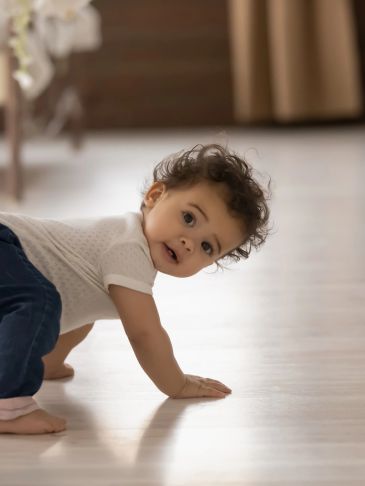
Sometimes babies develop a strong preference for looking, reaching, or moving toward one side of their body. They may spend more time in certain positions, have difficulty using both sides equally, or seem less comfortable moving in one direction. Some babies may crawl differently or have difficulty pulling to stand on one side. Physiotherapy can help identify why these movement differences are happening and provide simple, play-based strategies to encourage more balanced movement and positioning. We can help parents incorporate these strategies into everyday activities such as tummy time, play, carrying, and floor time to support comfortable and confident movement as their baby grows.

Neurological/Chromosomal/ Genetic Conditions
Neurological/Chromosomal/ Genetic Conditions
Physiotherapy can support babies with neurological, chromosomal, or genetic conditions by helping them build strength, coordination, balance, and movement skills. A physiotherapist can assess how your baby is moving and identify ways to make everyday activities like tummy time, sitting, reaching, playing, and moving around easier and more
Physiotherapy can support babies with neurological, chromosomal, or genetic conditions by helping them build strength, coordination, balance, and movement skills. A physiotherapist can assess how your baby is moving and identify ways to make everyday activities like tummy time, sitting, reaching, playing, and moving around easier and more successful. Therapy is individualized to your baby’s abilities, needs, and goals, with a focus on building skills through play and supporting participation in everyday life. We also work closely with parents and other members of your baby’s care team to provide practical strategies that can be incorporated into daily routines.
Conditions (not limited to): cerebral palsy, Down syndrome, spina bifida, spinal muscular atrophy, Rett syndrome, Prader-Willi syndrome, Williams syndrome, muscular dystrophy, etc.
Feeding Difficulties
Neurological/Chromosomal/ Genetic Conditions
Medical and Orthopaedic Conditions
Physiotherapy may be helpful for babies who experience feeding difficulties that are related to body positioning, muscle tension, or reduced strength. Tension or stiffness through the neck, shoulders, jaw, or body can sometimes make it harder for a baby to find a comfortable and supported position for feeding. A physiotherapist can assess
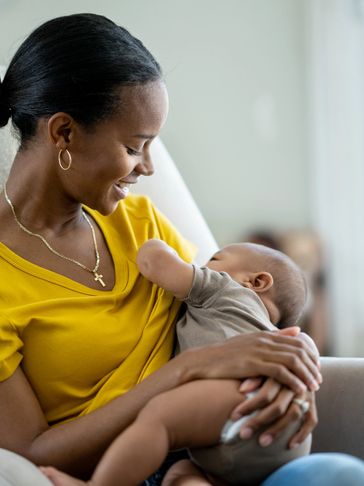
Physiotherapy may be helpful for babies who experience feeding difficulties that are related to body positioning, muscle tension, or reduced strength. Tension or stiffness through the neck, shoulders, jaw, or body can sometimes make it harder for a baby to find a comfortable and supported position for feeding. A physiotherapist can assess your baby’s movement and positioning and provide gentle, individualized strategies to improve comfort, alignment, and strength. We work alongside families and other healthcare providers, such as lactation consultants when additional feeding support is needed.
Medical and Orthopaedic Conditions
Neurological/Chromosomal/ Genetic Conditions
Medical and Orthopaedic Conditions
Physiotherapy can support babies with a variety of medical and orthopaedic conditions that may affect how they move, play, or develop. This can include conditions such as clubfoot, hip dysplasia, Erb’s palsy, brachial plexus injuries, congenital differences, and other concerns affecting the hips, legs, feet, arms, or muscles. A physiother
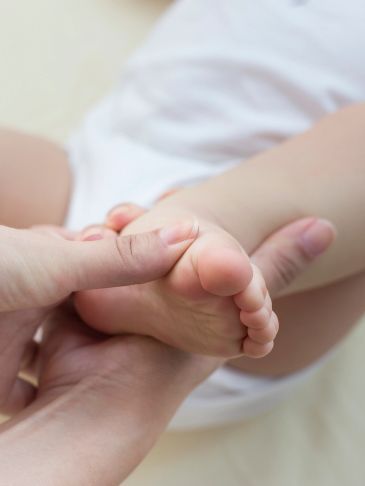
Physiotherapy can support babies with a variety of medical and orthopaedic conditions that may affect how they move, play, or develop. This can include conditions such as clubfoot, hip dysplasia, Erb’s palsy, brachial plexus injuries, congenital differences, and other concerns affecting the hips, legs, feet, arms, or muscles. A physiotherapist can assess your baby’s movement, strength, flexibility, and positioning and provide gentle, age-appropriate strategies to support comfort and development. We work alongside your baby’s medical team to help promote movement, function, and participation as they grow.